
Do you perform 'vocal magic' in terms of persuading—and wowing—audiences? Here's how to leverage the power of your voice for the public speaking stage.
Among audiences, perception is as important as reality.
That includes the perception (and reception) of a voice that can move—or turn off—listeners. The way you use nonverbal communication carries astonishing weight concerning credibility, authority, and that all-important attribute—believability.
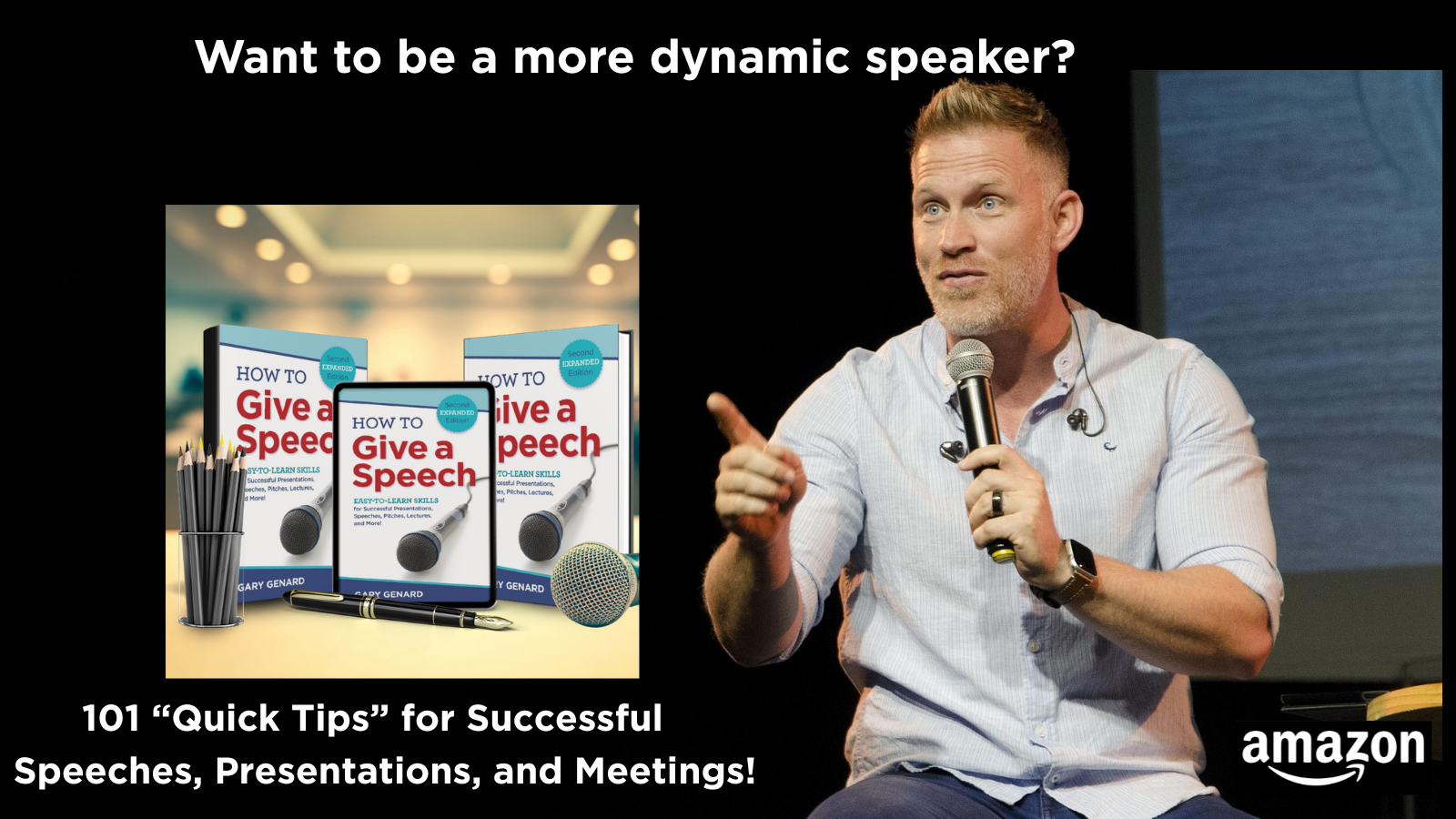
Read Chapter 8, "The Power of Your Voice," in my book How to Give a Speech. Also available on Amazon. Learn the essential tools for developing a career-enhancing voice!
The Potential of Your Voice
It’s easy to understand why this is so. Every human being (along with other species that share our lives) respond in basic primitive ways to the sound of a person’s voice. We all have recollections of being drawn to a speaker, or reacting as if to an unpleasant grating sound, simply in response to the quality of the voice we hear. Anyone who’s in the business of persuading listeners should give some serious consideration to this aspect of basic human nature. Yet how many of us think like that, wrapped up in putting out fires throughout our work day and ignoring one of the most adaptable tools we possess?
Want to improve your vocal ability? You can, even without a speech coach. Download my Free Tips and Tricks Guide, 5 Ways to Improve Your Voice as a Professional.
Your voice. It doesn’t require much thought, does it, between the years when you learn to talk and the age when your octaves suddenly go haywire.
As you may have guessed by now, this simply isn’t true. Learning how to use vocal dynamics—the techniques available to you to convince listeners through your voice—is one of the most valuable and productive steps you can take. Tone quality, pitch inflection, emphasis, variety in pace and tempo, pause, and all the emotional nuances your voice can subtly project, offer you a virtually limitless palette to “paint word pictures” to convince others.
“Speaking smart” through good vocal dynamics, then, is one of the very best ways to make your story come vibrantly alive for your listeners. (Here's the one vocal habit that can make you a better speaker. And here are two aspects of your speaking style that may be limiting you professionally.)
Achieving Presence and Authority
The voice isn’t a disembodied thing floating in space, of course. It's connected to breathing, energy, and relaxation. The voice, in other words, is inherently physical. Understanding that simple fact allows you to tap into Its fluidity, power, and sheer expressive subtlety.
One of things you need to do to make all of this work is get calm and focused. Learn how in my Free cheat sheet, "How to Calm Your Nerves Before Speaking." Download it now!
If you have the opportunity, work with an accomplished voice and speech coach to understand how human sound is produced and manipulated. In business, social settings, government, healthcare, finance, law, or any other field, your voice is well worth exploring and exploiting as one of your premiere tools for getting others to think, feel, or do what you would like them to—for their benefit as well as yours.
As you begin to understand and connect with the rich potential of your own voice, keep in mind that vocal production must be connected to something equally important: the content of your speech. That's because true, influential communication is a marriage of material and the manner in which it is delivered.
How do content and vocal delivery skills combine for maximum effectiveness?
Getting to "Flow"
They do so because every good speaker recreates in his or her listeners what that speaker is feeling. For true presence and authority, that is, you must combine what you say with how you say it. Words alone will not convince people. Your listeners will also be attentive to how you sound and what you look like while you’re speaking. Your content must combine with your tone of voice and the nonverbal communication you display: it's as simple as that.
Let’s make that into a rule that’s a little easier to understand:
Message + body language + vocal skills = persuasion!
Remember, if you believe in your message, if you truly believe, the way you move and the quality of your voice will make that message come through loud and clear. You will not have to try to be persuasive—you WILL BE persuasive. All it takes is learning good principles of nonverbal communication and sound vocal skills. (Of course, the voice is produced physically and so is an essential element of the "nonverbal" component of your speech.) Once you’re in this groove, you can concentrate on the needs of your listeners to hear your message, not on “how you are doing.” Persuasion will then happen organically and effectively!
Delivering to Your Listeners
With awareness and a firm focus on the potential of your own vocal power, you can learn how to use the subtlety of your voice to influence your audience. All human beings react instinctively to the quality of another's voice. This means that you can use your voice to build trust, to elicit sympathy, to validate honor, to indicate skepticism, to share sorrow, to broadcast injustice, to show disbelief or outrage or scorn . . . the list is virtually endless.
Once you’ve achieved a stronger and more flexible voice, you must remember that your listeners must still trust and respect you. That means having a conversation with your audience, not speechifying to them. And the most valuable tool for achieving that level of trust is also a simple one to remember: eye contact.
Look your listeners in the eye, and use your voice to persuade them of your cause. That’s speaking smart. That’s harnessing the wondrous power of your voice.
Like psychic mysteries? Tag along with Dr. William Scarlet, Scotland Yard's M.E.
Scotland Yard medical examiner Dr. Scarlet tracks a serial killer, while the country's most famous—and handsome—artist begins to go mad in Red Season. Find it here on Amazon.

You should follow me on Twitter here.

Gary Genard is an actor, author, and expert in public speaking and overcoming speaking fear. His company, The Genard Method offers live 1:1 Zoom executive coaching and corporate group training worldwide. He is the author of the Amazon Best-Seller How to Give a Speech. His second book, Fearless Speaking, was named in 2019 as “One of the 100 Best Confidence Books of All Time.” For nine consecutive years, he was ranked by Global Gurus as one of The World’s Top 30 Communication Professionals, and he has been named as one of America's Top 5 Speech Coaches. His handbook for presenting in videoconferences, Speaking Virtually offers techniques for developing virtual presence. He is also the author of Speak for Leadership: An Executive Speech Coach's Secrets for Developing Leadership Presence. His latest book is The Confidence Book: 75 Ways to Reduce Your Anxiety, Let Go of Your Fears, Change Your Negative Thinking, and Perform At Your Professional Best. He is also the creator of The Dr. William Scarlet psychic mysteries. Contact Gary here.
Photo credit: Phil Hearing at unsplash.com