Do you know how to organize presentations so they're persuasive and effective? Here are five common mistakes and how to avoid them.
Are you ready to offer your audiences something fresh? As we all know, food that's left out for too long goes stale—or worse. Why should presentations be any different?
As Hamlet said in Shakespeare's famous play, too many speeches are "weary, stale, flat, and unprofitable." Okay, he said it about the world, not business talks. But he did say it, and it's not a bad characterization of too many presentations whose freshness is long past its use by date.
Get stakeholders to sit up and take notice. Speak to lead with my book, Speak for Leadership. Discover how to engage, persuade, and inspire any audience. On Amazon.

A good performance will preserve and enhance your hard work. All the effort you've put into your presentations is too good to be wasted in a mediocre performance. And make no mistake: public speaking depends upon skilled delivery as much as any dramatic show. Don't let your audiences zone out or be bored! Listeners should know that it's not safe to sit back and be passive when you're speaking. Why? Because active engagement, connection, and the spark of shared interest will always be the order of the day.
Below are five ways you can use strategy, tactics, and—more than anything—an awareness of how audiences learn to take your talks from mundane to memorable. Think of this list as a template, to be used whatever your topic and whomever you're speaking to. Here, then, are five common mistakes and how you can avoid them.
1. Starting Off Dull as Dishwater
You know the standard opening to a business presentation, because it's been rolled out in front of you thousands of times. The topic is baldly announced, then a slide with "Agenda" pops up, with subtopics 1 through 5 enumerated. Then the audience is marched through that agenda as information is delivered. It all feels like a lesson for which there will be a test afterward.
Wouldn't you rather surprise and delight your audience with something that shows you're going to be interesting? Your opening should grab the audience and perk up their ears! Otherwise, they won't be anticipating the interesting connections you've hinted at, but wondering when this presentation will end.
So, how is it done? You'll find out in my Free resource, "How to Start a Speech: 12 Foolproof Ways to Grab Your Audience!" Get off to a strong start every time!
2. Forgetting to Take Out the Roadmap
Every time you speak, you take your audience on a journey. One of the biggest drawbacks to that "Items 1-5 on the Agenda" opening, is that it is, let's face it, stiff and boring. And the prospect of going on an adventure with a guide who knows the territory is never boring. (Learn more about speaking with influence in my Free ebook, High Impact Speaking: The Leader's Guide to Presenting With Integrity and Influence.)
Maybe "adventure" is going too far in the case of your topic. Fair enough. But the idea of a journey remains; and once you adopt it, your presentation is already more intriguing in your mind and listeners'. What you're saying is, "We're going to go someplace that's mutually interesting in the next hour. Here are our subtopics." Then you name those segments of your talk, each of which becomes a way station you'll be stopping at on your journey.
3. Failing to Reveal the WIIFM
And now for the secret sauce: telling the audience what's in it for them. It always amazes me that speakers don't incorporate this essential element of creating influence. Here's why this step should always be a part of the beginning of your speeches:
Every audience member is always in a "What's-In-It-For-Me" frame of mind: the WIIFM. And you need to answer that question for them. Consider the difference between the Agenda-style talk which presents items as content or data with no discernible connection with the audience's needs, and the WIIFM approach. And it's so easy to satisfy the WIIFM! All you need to say is, "The reason I want to talk about this today is because" . . . and here you tell the audience how this is going to benefit them, make their life easier, help them close more sales, etc. It's your magic wand for instilling immediate interest in everything you say from that point on. Here are 20 more ways to connect with an audience for lasting influence.
4. Dropping a Bowling Ball In Their Laps
This mistake comes from being overly focused on information delivery, to the neglect of performance skills. It's a trap many of us fall into as we think: "If my data are solid, they'll get everything they need from my talk." It may be true that your content is marvelous. You just have to be sure you're delivering it in a way that listeners can absorb and retain it.
How? Visualize each main point as its own mini-speech. Introduce and discuss that point so it lives on its own as a fully developed segment. PAUSE, then do something different with your voice as you begin your next main point. It really doesn't matter what you do vocally, as long as it sounds different. This technique breaks up your presentation into manageable sections for listeners, and the vocal clue says, "Listen up, here comes something new!" Otherwise, your speech goes on and on without any helpful breaks. Like dropping a bowing ball in their laps.
5. Falling Off a Cliff Instead of Ending Memorably
Now its time for your closing—the other most important part of your speech along with the opening. What you say here needs to be vivid and memorable, because this is the moment of the acid test: Will your influence continue long AFTER you've stopped talking? That won't be the case if you say, "That's all I have," or make your last point and stop, so we all fall off the cliff together. You've delivered a strong presentation as the main course, and now we want dessert!
That means saying (or showing) something that makes your ending "sticky." And here's where your imagination needs to come into play, just as it did with your grabbing opening. Take another look at my resource I mentioned earlier, 12 Foolproof Ways to Grab Your Audience! These rhetorical devices that provide you with a strong opening can also be used to make your closing memorable. You may want to mix 'em up by using a different approach for your introduction versus your conclusion, but every one of these devices works well.
Remember: it's never all about the content, however much you might convince yourself that that's the case. Organizing your talk is as strategic as it comes, and worth all your efforts.
You should follow me on Twitter here.
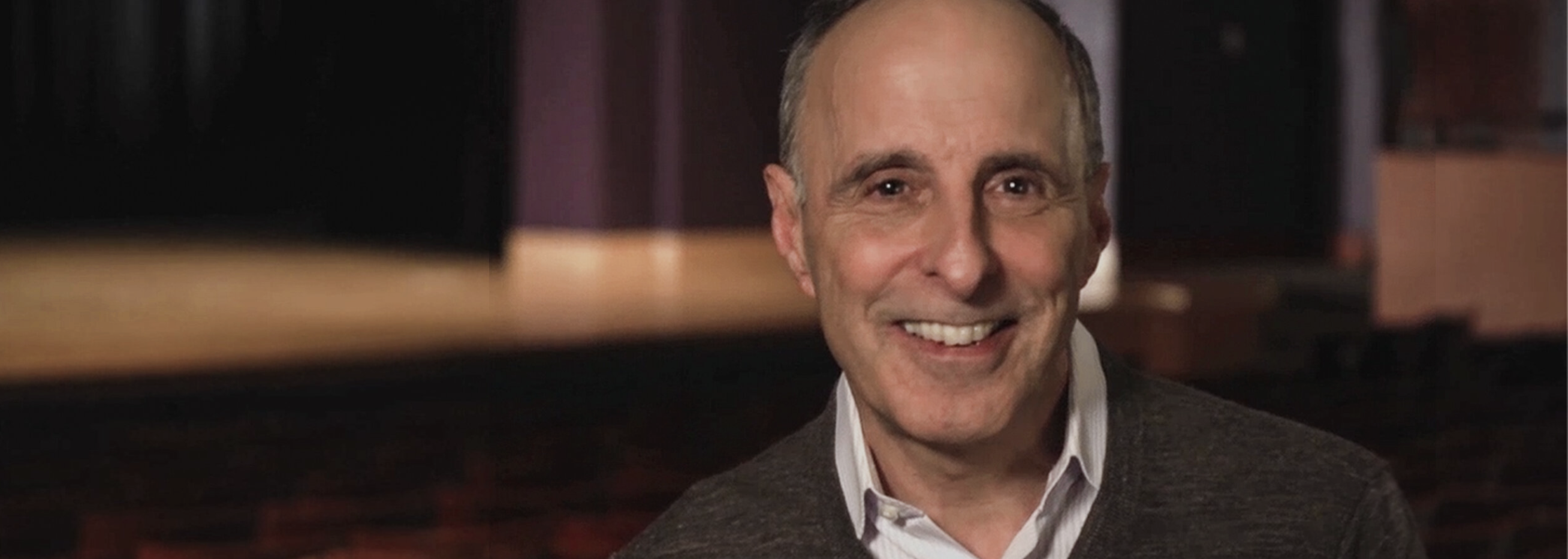
Gary Genard is an actor, author, and expert in public speaking and overcoming speaking fear. His company, The Genard Method offers live 1:1 Zoom executive coaching and corporate group training worldwide. He is the author of the Amazon Best-Seller How to Give a Speech. His second book, Fearless Speaking, was named in 2019 as “One of the 100 Best Confidence Books of All Time.” For nine consecutive years, he was ranked by Global Gurus as one of The World’s Top 30 Communication Professionals, and he has been named as one of America's Top 5 Speech Coaches. His handbook for presenting in videoconferences, Speaking Virtually offers techniques for developing virtual presence. He is also the author of Speak for Leadership: An Executive Speech Coach's Secrets for Developing Leadership Presence. His latest book is The Confidence Book: 75 Ways to Reduce Your Anxiety, Let Go of Your Fears, Change Your Negative Thinking, and Perform At Your Professional Best. He is also the creator of The Dr. William Scarlet supernatural thrillers. Contact Gary here.
Photo credit: Gustavo Fring on pexels.com